

 Dougal Shaw
- 15 December 2025
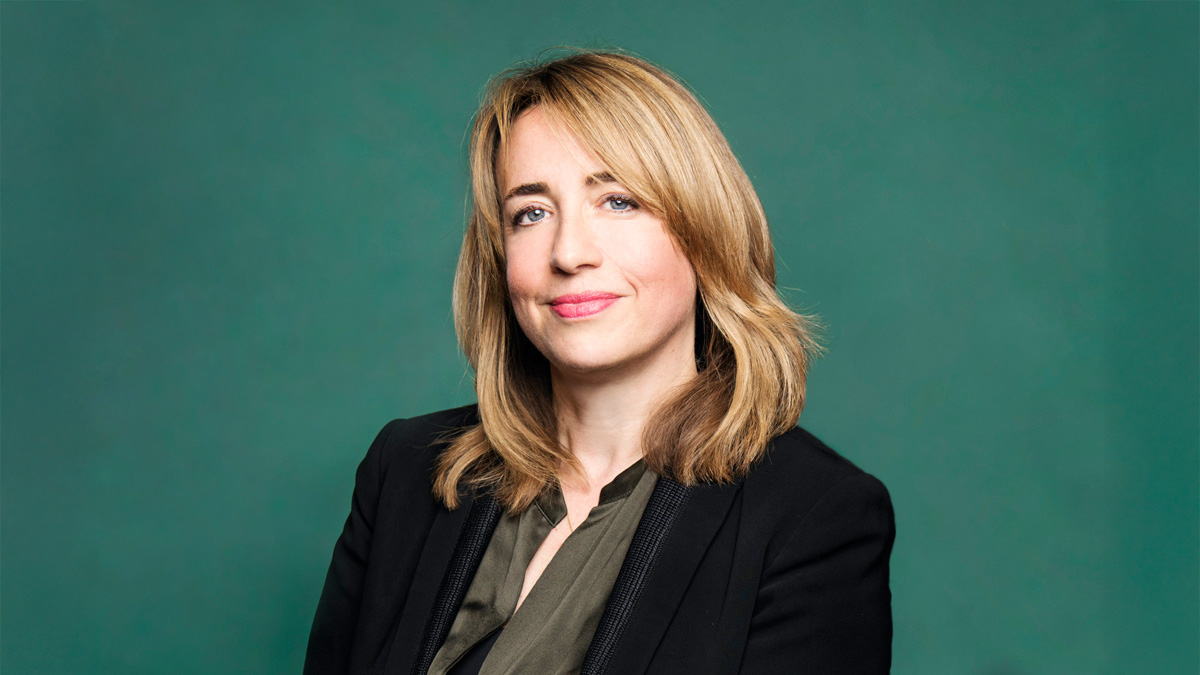
Many prime ministers don’t make it to 10 years in office. US presidents only get eight at most to secure their legacy. Katharine Viner has had a decade and counting as editor-in-chief at The Guardian. She’s also the first woman to hold the role. It’s given her time to gird herself as a leader, but also time to make radical changes to an institution more than two centuries old.
Now she’s planning more. Like leaders of so many other venerable organisations, her task has been continually to reinvent the business, to keep it relevant and commercially viable in the modern digital world. But it’s been a battle.
“When I look back on what it was like when I started in 2015, I do feel quite protective of that person,” says Viner. “What took me by surprise was the ferocious attacks from outside. The Guardian is always a flashpoint. Love it or hate it, you can’t ignore it – it’s that sort of brand. I’ve obviously found a way to deal with that. Things that would originally hit me for six now don’t even touch the sides.”
Viner’s association with The Guardian began early. She grew up in Yorkshire with teacher parents. Her first article was published in The Guardian in 1987 while she was in secondary school, expressing scepticism about GCSE exams replacing O levels and CSEs. Then, in her final year at the University of Oxford, where she read English, she won a competition organised by The Guardian’s women’s page.
On graduation, she worked at Cosmopolitan magazine and The Sunday Times before joining The Guardian in 1997 on the women’s page. She then became the editor of the weekend magazine supplement and it’s been a steady rise to the top since, with stints editing The Guardian’s Australian and US digital editions.
She became editor-in-chief in 2015, somewhat against the odds, as she wasn’t seen as the obvious successor. But The Guardian does things differently. When most CEOs are chosen, it’s a fait accompli for staff. The decision has been made by the board or the owners, perhaps helped by a head-hunter.
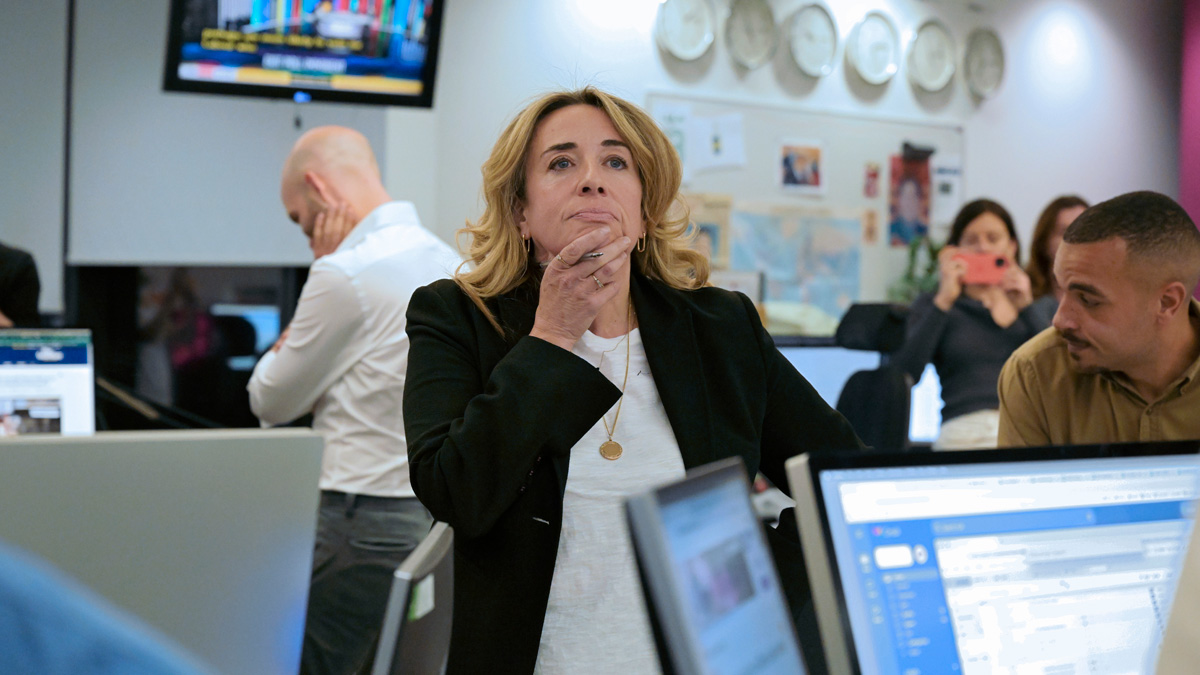
However, at The Guardian the position of editor is decided by something more akin to an election for a school head pupil. There are hustings events for candidates in which many union members are balloted.
Separately, candidates must make their case to the Scott Trust, the charity that, in effect, underwrites The Guardian, giving it the financial stability to remain independent. The trust is the sole shareholder of the Guardian Media Group, which has its own CEO, who works closely with the editor-in-chief.
The succession arrangement is, says Viner, “an absolutely crazy process in the modern world. When I tell people from different kinds of businesses about it, they’re absolutely bewildered.”
The build-up to the hustings is like a political campaign, she adds. The hustings, when candidates set out their vision, are videoed to make sure nobody is spinning one line for the shopfloor and another for the executives on the trust’s committee.
This process has been used for the last two selections and in both cases the electorate and committee arrived at the same choice as editor-in-chief. But the challenge facing the editor in 2015 was both quite clear and quite different for the leader of a left-leaning, liberal publication: it required someone with a head for business.
“Ten years ago, The Guardian faced a stark reality,” wrote Ole Jacob Sunde, chair of the Scott Trust, in its annual report this year. The publication was losing £85m a year. “Had this situation remained uncorrected, The Guardian as we know it might not exist.”
One of the great achievements of Viner’s tenure has been to return the publication to profit. It broke even in 2019 and achieved positive cash flow in 2022. Its most recent reports show it is again losing money, but only because of a deliberate choice to invest in new areas.
Viner had to take cost-cutting measures such as cutting staff numbers by 450 and changing its printing process. But a big reason for the turnaround in its financial fortunes has been the launch and expansion of the reader revenue model. The Guardian makes frequent direct appeals to its readership for voluntary financial contributions, whether one-off or ongoing.
In an age when many publications have had to put content behind a paywall, this approach has allowed The Guardian to keep its reporting accessible. In turn, this has kept its content more shareable online, a virtuous circle (a benefit which paywalls at other quality dailies such as The Times and the Financial Times restrict).
“[The idea of reader revenue] was so controversial, internally and externally,” says Viner. “It was quite a disruptive idea, ridiculed everywhere.” Now around 40 per cent of the £276m annual revenue comes from this source. The Guardian’s employee structure is broadly divided between editorial and commercial. It was the former that pushed the reader revenue idea, she says.
“The commercial team at the time really loathed the idea,” says Viner. They thought it undermined the whole concept of being a commercial organisation. It was seen as something more associated with Wikipedia or charity fundraising.
The original appeal to readers was put in an editorial slot in the paper, rather than an advertising one: “Slightly subversively,” says Viner. But it was immediately so successful that the commercial team dropped its objections and got behind the strategy.
One of Viner’s key learnings from this is around the psychology of the sell: “The messaging at the beginning was ‘The Guardian is in lots of trouble, we’ve got less than six years left unless we do something, imagine a world without The Guardian in it – so give us some money.’
“And that was pretty successful. But what was interesting to me – and has really made us think about how we’ve done it since – is that after a few months of this, we switched it to: ‘This plan is working, come and be part of this.’ And that was much more successful.”
Positive messaging has been far more successful in garnering long-term support. More recently, The Guardian has experimented with ideas such as getting reporters to email readers with personalised appeals, including well-known writers such as George Monbiot.
Being free to view online maximises traffic and potential advertising revenues. But advertising budgets remain squeezed and Viner has had to look for other opportunities to monetise a heritage brand.
She has had to instil a culture of innovation at The Guardian to push money-making initiatives through. Journalists are not always the most receptive employees to commercially driven decisions, particularly, it may be argued, at more “progressive” titles.
“We are a classic legacy brand,” says Viner, “which has lots of advantages and lots of disadvantages. So yes, I think one of the things we’re trying to do is to get people thinking really aggressively about new audiences and new ways of doing journalism.” For each innovation project, she will run open sessions for colleagues to come forward with ideas. She has been impressed by the level of engagement across the newsroom.
Viner has also had to get an important message across to all staff. “If you have editorial success without commercial success, you go bust. If you have commercial success without editorial success, there’s just no point. So you need the two to be working together.”
It’s a delicate balancing act. But it’s a lesson she discovered early in her career in the 1990s, when she was editing The Guardian’s weekend magazine. “I learnt very quickly that if the advertising team got more adverts, then I got more pages and I got more money to spend on journalism.
“So it seemed to me a no-brainer. Now, obviously how you do that and where you draw the line is really, really important, but I’ve always been commercially minded, because I think the two things are linked.”
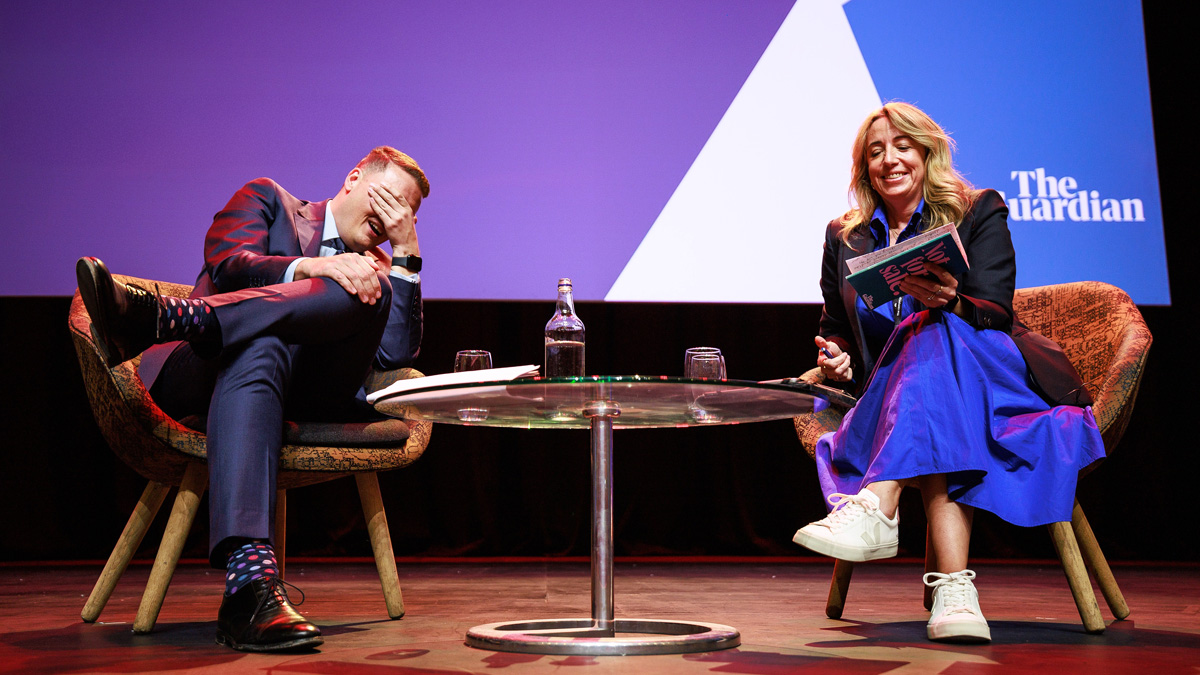
In the days of print-only journalism, advertising and journalism could function almost in separate silos. But in the modern digital age, the two are closely entwined and must work in a coordinated fashion, she believes.
Viner is that unusual thing, a journalist leader with a head for business. And when it comes to getting things done, she has another head start. It’s an important principle at the newspaper that editorial will always hold slightly more power, she points out.
“There’s this interesting situation at The Guardian, which will be a surprise to your readers,” says Viner. “The editor-in-chief is technically an inch or two ahead of the business leader [Anna Bateson, CEO of Guardian Media Group] and that’s actually written in my contract, believe it or not.
“What that means is we can say, ‘You know what, we’re not going to take that advert.’ Or ‘We’re not going to do that thing.’ The editorial team is sort of sovereign. But I always think if you have a properly coordinated relationship with the commercial team, you should never have to be pulling rank in that way. It should be a joined-up project, and that’s how it works at the moment.”
Viner’s entrepreneurial spirit was stimulated by a formative period living in Australia for two years while she set up Guardian Australia, which launched in 2013. It also gave her the experience of honing a digital-first brand that subsequently set her in good standing for the editor-in-chief role.
The venture felt like a start-up. She had a core team of just a dozen people. Her main goal was for the product to feel both “thoroughly Australian and thoroughly Guardian”.
She brought some colleagues over from the UK to import some familiarity and sense of best practice, but they worked mainly behind the scenes. The reporters and editors she hired, the “voice of the paper”, were all Australian.
“It was a really formative experience for me,” says Viner. “It showed me how if you’ve got a very small number of resources, it forces you to make really tough decisions about who you want to be. It really made me believe that the best size of a team is slightly too small. Not a lot too small, because then you just all collapse. But if it’s slightly too small, you go, ‘OK, we’re not going to do that, but we’re going to do that.’
“So we focused on politics, the environment, indigenous affairs and immigration, and we just had to be ruthless about everything else. It was a big success from the start; audiences loved it.” Having a small team forced her to have a not-to-do list, turning down opportunities that could have been distractions.
“I think we were also very digitally forward, which at the time the Australian media was not,” she says. “We were real insurgents with an almost start-up mentality – but backed by The Guardian.”
Bringing about radical change is a big task and a big ask for everyone at The Guardian, and especially for the editor-in-chief leading the charge, battle-hardened though she may be after her first 10 years. But perhaps Viner has some weapons up her sleeve.
First of all she has a coach, who she’s turned to for advice for more than a decade. She is someone she met at The Guardian who works in HR and professional development – so not a former media editor.
“She’s just fantastic and it’s such a partnership,” says Viner. “She’ll often remind me of things that I’ve forgotten about, things I found always difficult in the past. It is constant learning in a job like this. I don’t think you’re ever fully formed, really.”
The other resource she draws strength from is perhaps more surprising and has only come into her life more recently. It comes up when she’s asked about her personal productivity hacks. “My top hack as a 54-year-old woman,” she exclaims with a grin, “is hormone replacement therapy! There aren’t many women doing jobs like mine at my age, and I think oestrogen is like rocket fuel. Highly recommended.”
Related and recommended
Spells of rare sporting brilliance show that finding intense concentration relies on achieving balance in your life
Rohan Blacker looks back at his time with e-commerce pioneer Sofa.com and explains the thinking behind his latest online furniture project
Rory Sutherland is one of the UK’s best-known marketing thinkers. He sets out why businesses should rethink how they value marketing, from direct mail to call centres and customer kindness
Leaders must realise the tech revolution can achieve its full potential only when human values remain central to change